2025
Automated Issue Management System
Chaos Between Detection and Resolution
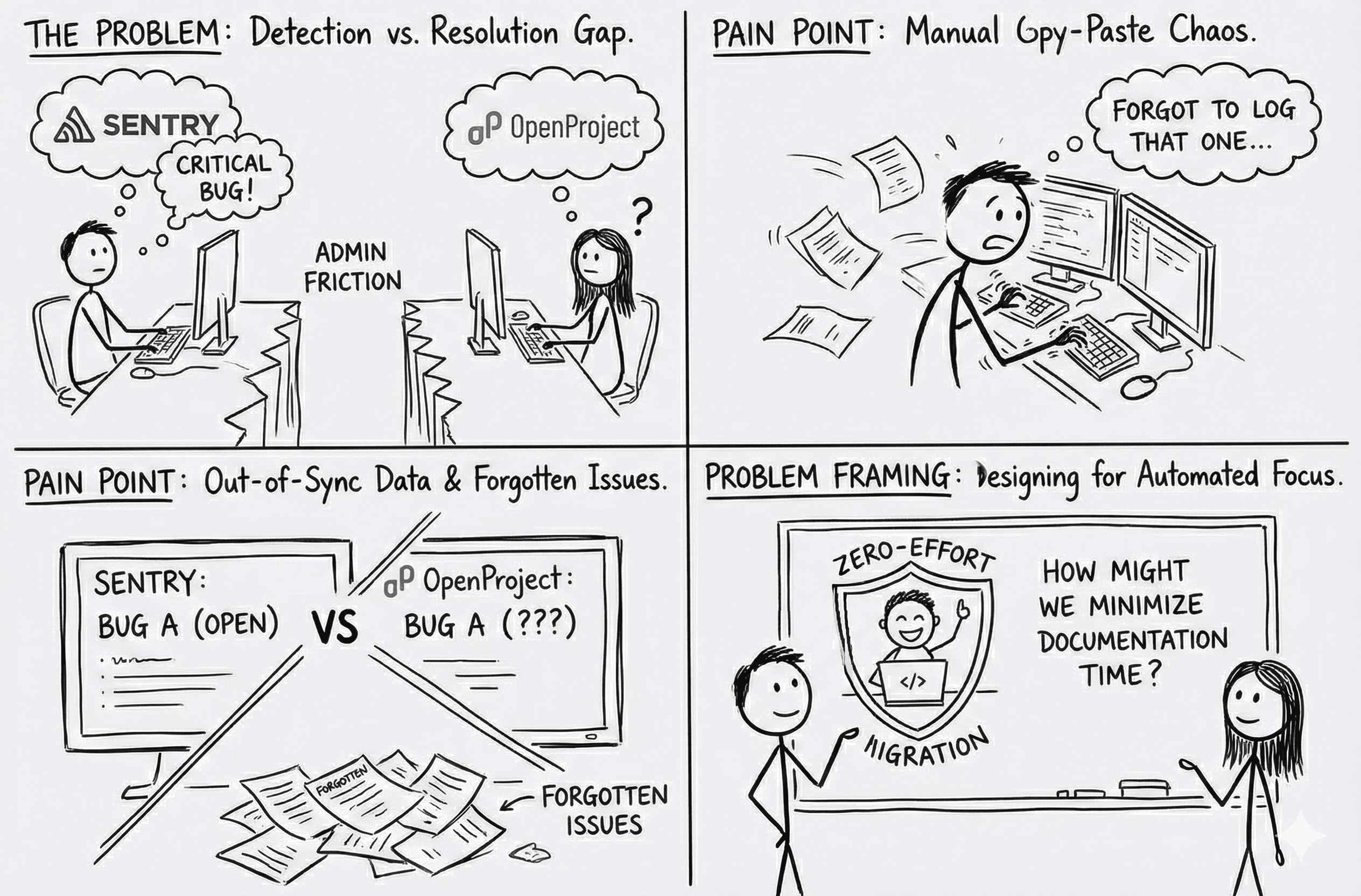
In software development, finding a bug is only half the battle. At GMEDIA, developers faced a high degree of "Administrative Friction" Sentry was great at detecting errors, but moving those errors into the team’s Project Management tool (OpenProject) was a tedious manual process.
This gap resulted in out-of-sync data, forgotten issues, and a lack of real-time visibility into the codebase's health. I co-designed a web-based bridge to eliminate these bottlenecks, ensuring that every critical error detected by the server is instantly actionable within the project lifecycle.
Client
2025
Timeline
16 weeks
Role
Frontend Engineer & UI/UX Designer
Service(s)
UI/UX Design, Full-Stack Development (Laravel & Vue.js), Digital Strategy.
Project goals
Designing for Automated Focus
For internal tools, the "User" is the developer and the Project Manager. Our goal was not just to connect two APIs, but to design a "Zero-Effort" migration strategy.
How Might We minimize the time spent on issue documentation so our developers can spend more time actually fixing code?
Key Strategic Goals:
Systemic Integrity: Automatic mapping of technical error metadata into business-readable project tasks.
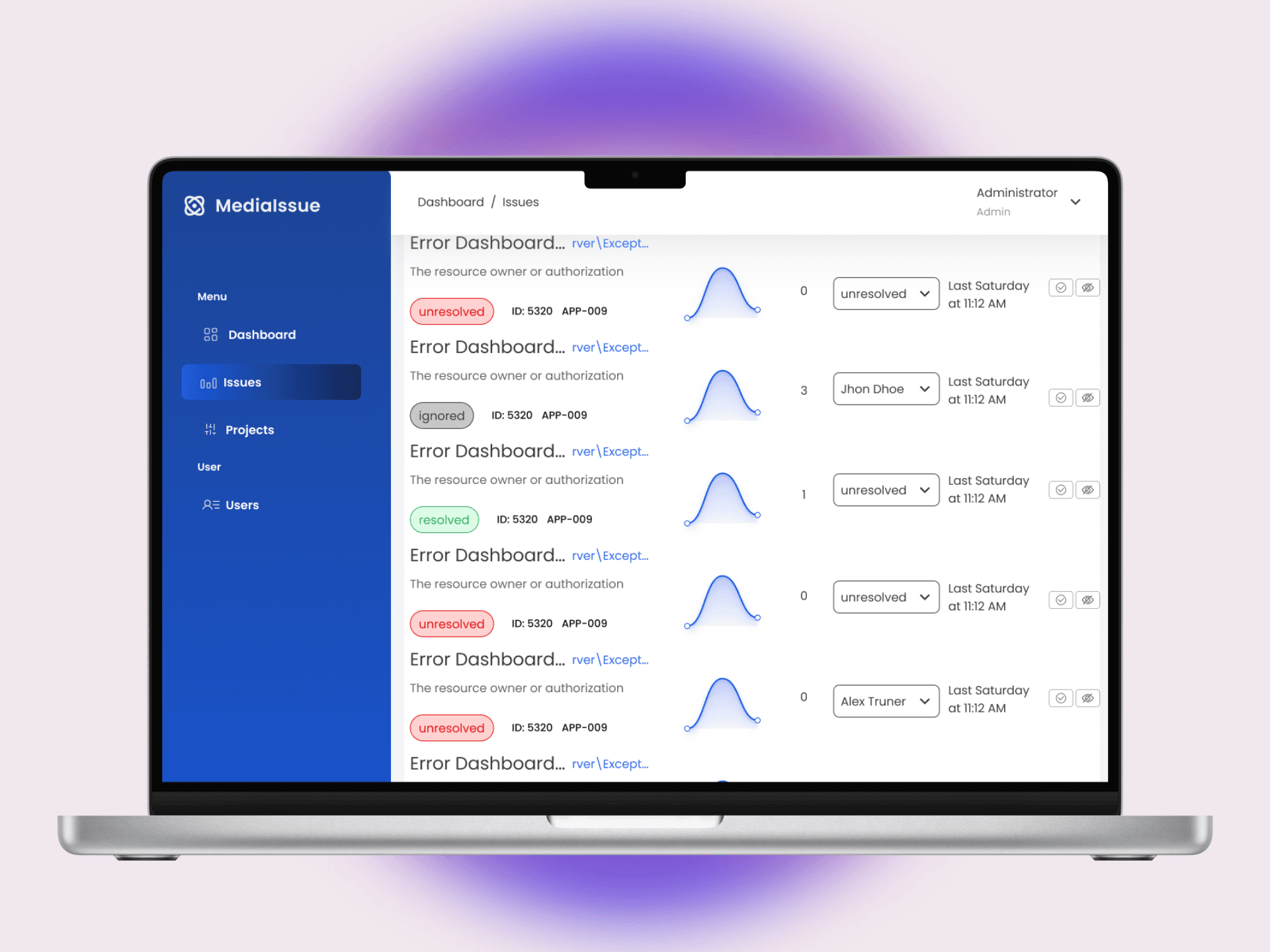
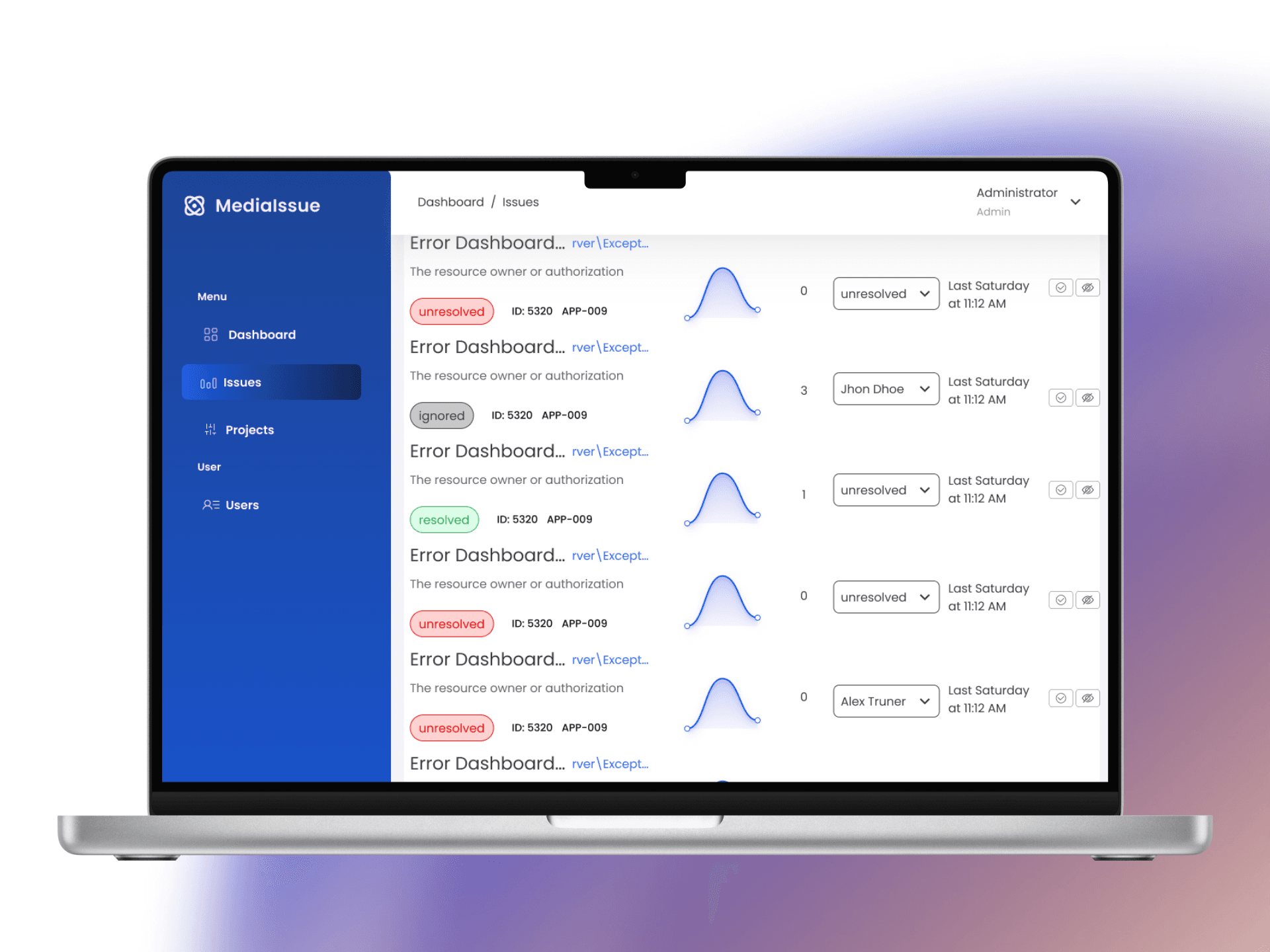
Data Visualization: Designing an "At-a-glance" dashboard for management to track unresolved vs. ignored issues.
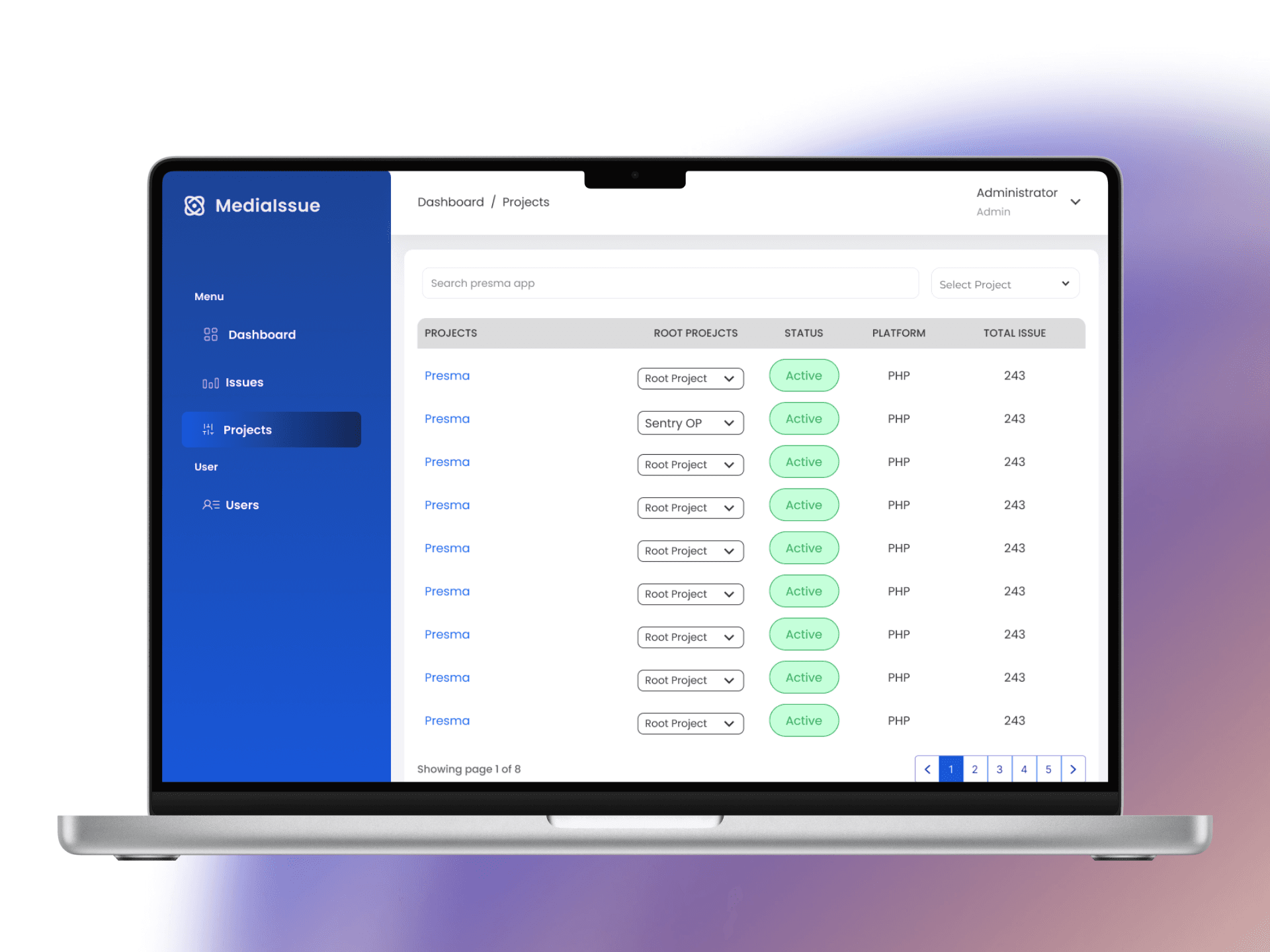
Governance: Establishing a secure, multi-tenant Admin portal to manage project-level access permissions.
The following storyboard captures a real frustration faced by the people we are designing for.

Processs Thinking
Designing for Automated Focus
For internal tools, the "User" is the developer and the Project Manager. Our goal was not just to connect two APIs, but to design a "Zero-Effort" migration strategy.
How Might We minimize the time spent on issue documentation so our developers can spend more time actually fixing code?
Key Strategic Goals:
Systemic Integrity: Automatic mapping of technical error metadata into business-readable project tasks.
Data Visualization: Designing an "At-a-glance" dashboard for management to track unresolved vs. ignored issues.
Governance: Establishing a secure, multi-tenant Admin portal to manage project-level access permissions.
The following storyboard captures a real frustration faced by the people we are designing for.


Result
Moving the Needle for Product Stability
This integration transformed GMEDIA’s internal management from a manual chore into an automated, data-driven cycle.
Zero Human-Input Errors: By removing the "Copy-Paste" migration phase, the integrity of technical error data improved significantly.
Strategic Efficiency: The theoretical turnaround from "Issue Detected" to "Issue Assigned" was reduced from hours to seconds.
Decision-Ready Stats: The analytics feature provided a clear quality score for projects, helping leads allocate resources to the most unstable components.
This project proved that investing in Internal UX and automation is the most effective strategy for building scalable and reliable tech products.

More works

Stop looking for a sign.
This is it. Say hello.